
Furnace blowing cold air or not turning on: causes and fixes for NJ homeowners
A furnace blowing cold air is usually caused by one of seven things: the thermostat fan set to ON, a clogged filter tripping the high-limit switch, a dirty flame sensor, a failed igniter, a blocked condensate drain on a 90%+ furnace, snow or leaves in the PVC vent pipes, or no gas reaching the burners. You can safely check four or five of those yourself in about 15 minutes. The rest need a licensed technician.
We take these calls all winter from Linden, Cranford and Westfield, and plenty of them end with a thermostat setting or a filter. Below: what each symptom means, which checks are safe, and how to spot a gas or carbon monoxide emergency.
Key points
- Thermostat fan on ON instead of AUTO makes the vents blow room-temperature air between heating cycles.
- A furnace that lights and then shuts off within seconds usually has a dirty flame sensor.
- High-efficiency 90%+ furnaces shut down when the condensate trap clogs or the white PVC vents outside get blocked.
- Write down the blinking LED code before you call. It tells the tech where to start.
- If you smell gas or a CO alarm sounds, get everyone outside and call from there.
Why is my furnace blowing cold air?
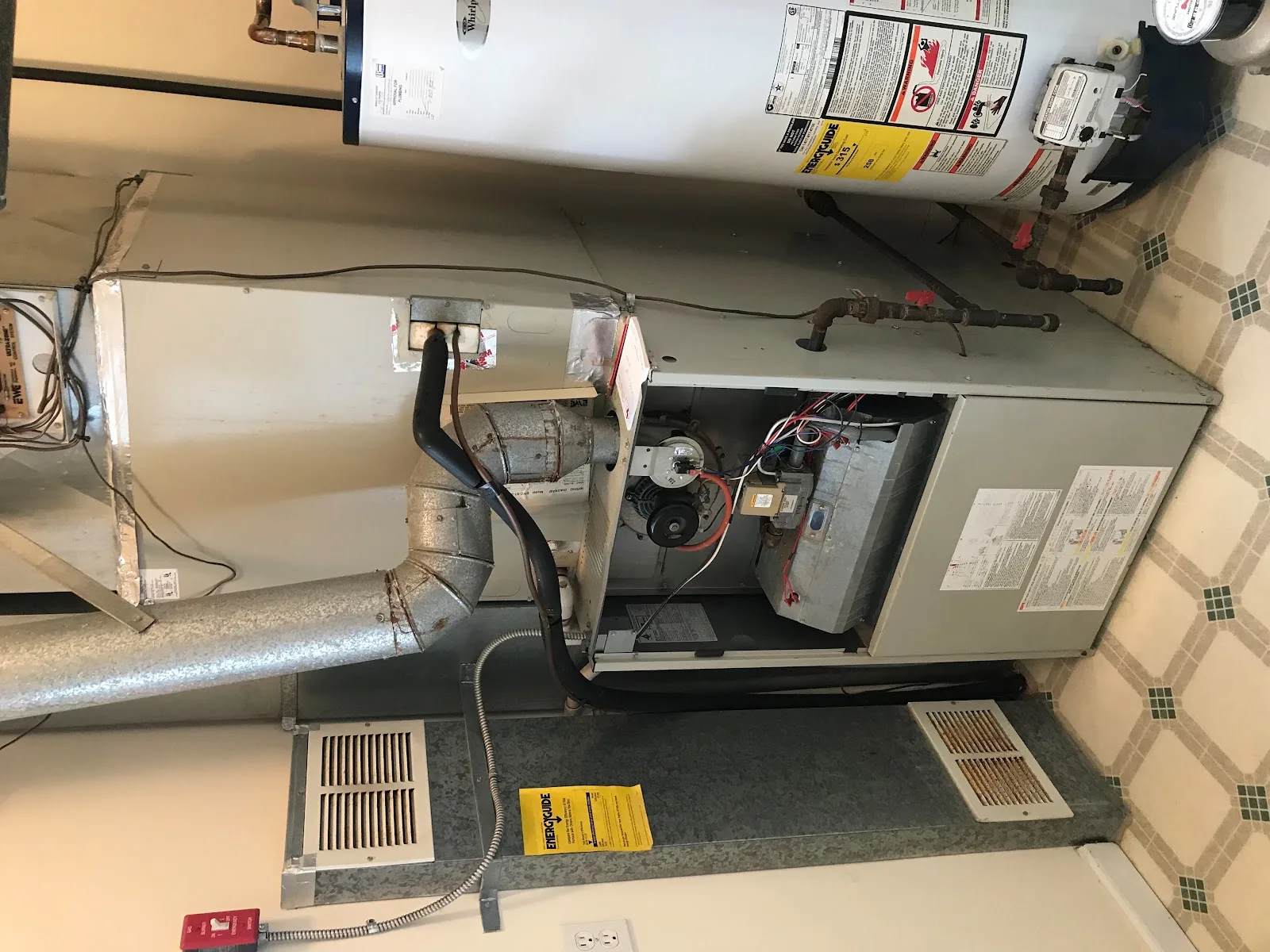
Your furnace blows cold air when the blower runs but the burners aren't lit, or when they light and shut off early. The blower and the burners are separate systems. A safety switch, a sensor or a thermostat setting can stop the flame while the fan keeps pushing unheated basement air through your ducts, so the vents feel cold even though the system sounds like it's running.
Here's the short list, roughly from most common to least common in the homes we see around Linden and Clark:
- Thermostat fan set to ON, so the blower runs between burner cycles.
- Dirty filter. Low airflow overheats the furnace and the high-limit switch kills the burners while the blower keeps running.
- Dirty flame sensor. The burners light, the board can't confirm a flame, and the gas shuts off within seconds.
- Cracked hot surface igniter, so the gas never lights.
- Clogged condensate trap, line or pump on a 90%+ furnace.
- PVC intake or exhaust blocked by snow, ice, leaves or a nest, which keeps the pressure switch open.
- Gas supply off at the valve or the meter.
A bad inducer motor, pressure switch, gas valve or control board can also do it. Those need a technician with a meter and parts.
What each symptom usually points to
The pattern tells you more than the cold air itself. A furnace that never starts, one that quits after a few seconds, and one that runs but blows lukewarm air each point to different parts. Match what you see below with the likely cause and whether it's safe to check.
| What you notice | Likely cause | Safe to check yourself? |
|---|---|---|
| Vents blow cool air between cycles, fan never stops | Thermostat fan set to ON | Yes. Switch the fan to AUTO. |
| Furnace heats for a few minutes, then blows cold for a while | Dirty filter tripping the high-limit switch | Yes. Replace the filter. |
| Burners light, then shut off in a few seconds, repeats | Dirty flame sensor | Look only. Cleaning it means opening the burner area, so call a tech. |
| You hear the inducer fan, but no flame ever appears | Failed igniter, gas valve or no gas supply | Check that the gas valve handle is open and other gas appliances work. |
| Nothing happens at all, no lights, no sound | Power off, tripped breaker, service switch, door switch, dead thermostat batteries | Yes. Check power, switch, door panel and batteries. |
| Water on the floor or gurgling, 90%+ furnace shuts down | Clogged condensate trap, line or pump | Look for a full or dead condensate pump. Leave the trap to a tech. |
| Gas smell, CO alarm, headaches or nausea | Gas leak or carbon monoxide | No. Leave the house and call from outside. |
If the furnace turns on then off over and over, time it. A flame lasting a few seconds points at the flame sensor. Several minutes of heat before it quits usually means an airflow problem.
Safe checks to try before you call for furnace repair
You can work through eight checks without tools or opening any part of the furnace that holds gas or flame. Go in this order, since the first few solve the most calls. If a fix works once but the problem returns within a day, book a technician, because a part is wearing out.
1. Look at the thermostat settings
Confirm the mode says HEAT and the set temperature is at least 3 degrees above room temperature. If the fan says ON, change it to AUTO. On a smart thermostat, check that a schedule or away mode isn't holding the temperature down. If the heat stopped right after a new smart thermostat went in, suspect the C wire. Our smart thermostat installation guide for Union County covers the wiring.
2. Replace the thermostat batteries
Many thermostats run on two AA or AAA batteries, and a weak set can blank the screen or stop the call for heat. If the display is dim or empty, swap in fresh batteries first.
3. Check the breaker and the furnace service switch
Look at your panel for a tripped breaker labeled furnace or heat. Then find the service switch. It looks like a light switch and sits on the furnace, a nearby wall or at the top of the basement stairs, sometimes under a red cover plate. People flip it off thinking it's a basement light. It should be ON.
4. Make sure the furnace door panel is seated
Behind the lower panel sits a push-button door safety switch. If the panel went back crooked after a filter change, the switch stays open and the furnace won't run. Press the door firmly until it latches on both sides.
5. Replace the air filter
Hold the filter up to a light. If no light comes through, replace it. A 1-inch filter typically needs changing every 1-3 months in heating season, a 4-5 inch media filter every 6-12 months. The arrow points toward the furnace. Give the system 15-20 minutes afterward to reset the high-limit switch.
6. Check the white PVC pipes outside
A 90%+ furnace breathes in and exhausts through two white PVC pipes on a side wall or the roof. Snow drifts, ice, leaves and nests block them. Clear the openings by hand. After a nor'easter in Westfield or Fanwood, this is the first thing we ask about.
7. Look at the condensate drain and pump
High-efficiency furnaces make water, which runs through a plastic trap to a floor drain or a small condensate pump. A full pump with a silent motor, or a frozen outdoor drain line, trips a safety switch. Check that the pump is plugged in and the tube isn't kinked.
8. Read the blinking LED code and write it down
Most furnaces from the last 20 years have a control board light visible through a small window in the lower door. Count the blinks, note any pause between groups, and write it down. The code chart is usually on a label inside the door. That code can point a technician straight to a pressure switch, flame sensor or limit problem.
What not to do when the furnace keeps shutting off
Don't keep resetting the furnace and don't bypass any switch to make it run. Every safety switch exists to stop a fire, a gas buildup or carbon monoxide from reaching your living space. Repeated power cycling can lock the control board out for an hour or more.
- Jumping a pressure or high-limit switch with a wire hides the real fault and can push exhaust into the house.
- Taping down the door safety switch to run with the panel off.
- Touching the hot surface igniter. It cracks easily, and skin oil shortens its life.
- Running with no filter "just for tonight," which coats the blower wheel and A-coil in dust.
- Heating the house with a gas oven or range, a carbon monoxide risk.
One reset after fixing a filter, switch or vent pipe is fine: service switch off, wait 30 seconds, back on. If it fails again, call a technician.
Furnace still blowing cold air?
Blue Air One handles furnace repair from our shop on W. Elizabeth Ave in Linden. Call with your LED code ready and we'll tell you what we're looking for before we arrive.
Call (908) 275-3953 Request service onlineIf you smell gas or the CO alarm goes off
If you smell rotten eggs near the furnace or a carbon monoxide alarm sounds, get everyone out of the house right away, pets included. Don't flip light switches, unplug anything or try to find the leak. Once you're outside, call your gas utility's emergency line or 911. In Union County that's Elizabethtown Gas or PSE&G, depending on your street.
Carbon monoxide has no smell, so the alarm is your early warning. New Jersey requires carbon monoxide alarms in homes with fuel-burning appliances, near sleeping areas. Headaches or nausea that ease outside are a warning sign even without an alarm. Test CO alarms when you change the filter.
A cracked heat exchanger, blocked flue or failing inducer can leak exhaust into the air stream, so a tech who finds one will shut the furnace off and tag it until it's repaired or replaced.
When a furnace that won't turn on is an emergency
No heat becomes an emergency when indoor temperatures are falling toward the 50s, when there's a baby, an older adult or someone sick in the house, or when outdoor temperatures drop low enough to freeze pipes. In a New Jersey January, a house without heat can lose 10 degrees or more overnight, and exterior-wall pipes in older Linden and Cranford homes are the first to freeze.
Scorch marks around the furnace, water pouring from it, or loud banging or grinding before it shuts off also call for same-day service.
Blue Air One handles emergency calls, and our post on emergency HVAC services explains how those visits work. For a standard no-heat call, book our heater repair service. While you wait, shut doors to unused rooms, open sink cabinets on outside walls, and keep space heaters away from curtains and bedding.
Keeping the house warm during the work matters too. Richard O. wrote in his Google review: "They even brought heaters in case the house got cool."
Heat pump homes: defrost mode can feel like cold air
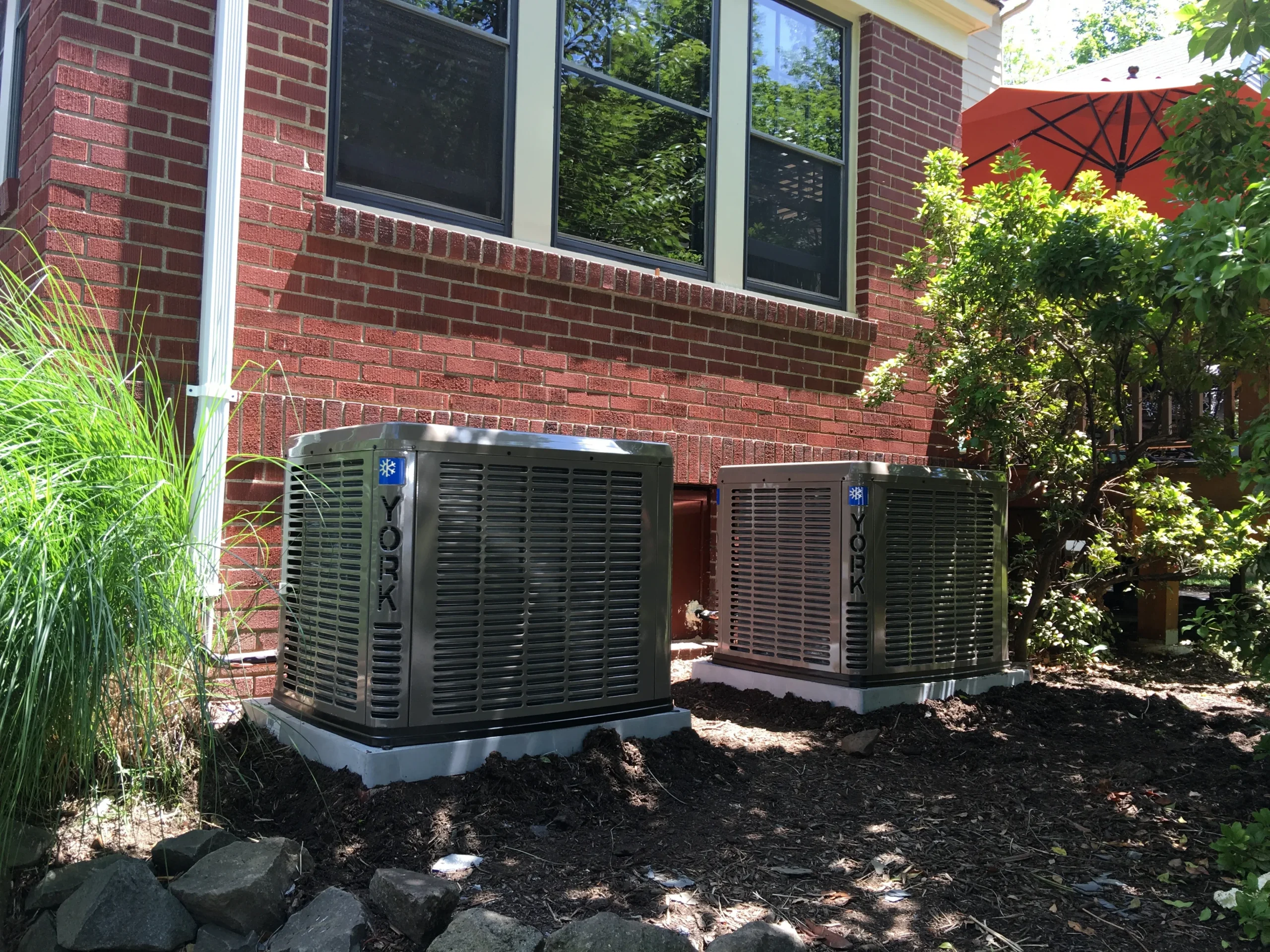
If you heat with a heat pump, short bursts of cool air in winter are often normal defrost mode. When frost builds on the outdoor coil, the system reverses for a few minutes to melt it. You may see steam rising from the outdoor unit and feel cooler air at the vents until the backup heat strips kick in.
Heat pump air also runs cooler than furnace air over longer cycles, by design. Call if the outdoor unit is buried in ice or the house can't hold temperature. If you're weighing a switch, our comparison of heat pumps vs gas furnaces for NJ winters covers how cold-climate units handle a Union County cold snap.
How heating maintenance prevents most no-heat calls
A yearly furnace tune-up catches the parts behind most cold-air calls before they fail: dirty flame sensors, worn igniters, clogged condensate traps and weak inducer motors. Doing that in October costs less than a January breakdown. A good fall visit includes:
- Cleaning the flame sensor and testing the igniter and safety switches.
- Flushing the condensate trap and testing the pump on 90%+ furnaces.
- Checking the heat exchanger for cracks and the vents for blockage.
- A carbon monoxide check around the furnace and flue.
Book a fall tune-up through our heating maintenance service, and see our post on seasonal HVAC maintenance in Cranford for a season-by-season list.
Repair or replace a 15-20 year old furnace?
Repair a furnace under about 15 years old unless the heat exchanger is cracked. Past 15-20 years, which is the typical furnace lifespan, a major repair like a heat exchanger, control board plus inducer, or a blower motor often makes replacement the better money. A cracked heat exchanger on an older furnace is almost always a replacement.
Some numbers to weigh. A gas furnace replacement in New Jersey runs about $3,500 to $8,500 in 2026, according to HVACProjectCost's New Jersey guide, and North Jersey labor runs 15-20% above the state average. Your final price depends on a site visit, a load calculation and the condition of your ducts. Our breakdown of what a new HVAC system costs in NJ goes through those numbers in more detail.
Rebates change the math too. Elizabethtown Gas pays $900 for a 95%+ AFUE furnace that replaces a non-condensing furnace, per its residential rebate application. The federal 25C tax credit ended for equipment installed after December 31, 2025, so 2026 installs get no federal credit. If you're paying over time, our residential financing options spread the cost out.
We lay out both options with prices and you decide, the way it's worked since Marcel Majernik started the company in 2007. If you replace, our furnace and heating installation team handles the permit, the install and the town inspection.
What to do next if your furnace still won't heat
If the eight checks didn't fix it, call a licensed HVAC company with notes ready: the furnace's age, the LED blink code, what it does before it quits, and your last filter change. That cuts diagnosis time and helps the tech bring the right part.
- Write down the LED code and the model number from the label inside the door.
- Photograph the outside PVC pipes and the condensate pump.
- Call (908) 275-3953 and mention any gas smell or CO alarm right away.
We work across Union County and nearby Middlesex County, with service pages for HVAC service in Linden, Cranford, Westfield and other towns. Eraldo R. summed up a recent heating visit with our tech Vadym Kostashchuk this way: "Fantastic and quick experience with working on my heating." You can reach us through the contact page any time.
No heat in Linden or Union County?
Blue Air One is family owned, licensed in New Jersey (LIC# NJ19HC00122900) and rated 4.9 stars across 114+ Google reviews. Call now and tell us your blink code.
Call (908) 275-3953 Request service onlineFrequently asked questions about a furnace blowing cold air
Why is my furnace blowing cold air when the heat is on?
The most common reason is the thermostat fan set to ON, which runs the blower between heating cycles. If the fan is on AUTO, look at the filter next, since a clogged filter trips the high-limit switch. After that, a dirty flame sensor, failed igniter, blocked PVC vent or clogged condensate drain are the usual causes.
Why does my furnace turn on then off after a few seconds?
A furnace that lights and shuts off within a few seconds usually has a dirty flame sensor. The burners light, the control board can't confirm the flame, and it closes the gas valve as a safety step. Many boards retry a few times and then lock out. A technician can clean or replace the sensor in one visit.
How do I reset my furnace?
Turn off the service switch near the furnace, which looks like a light switch, wait about 30 seconds, and turn it back on. Make sure the door panel is seated so the safety switch closes. Reset once after fixing a filter, vent or switch. If the furnace fails again, call a technician instead of resetting it over and over.
Why did my high-efficiency furnace stop working after a snowstorm?
Snow or ice probably blocked the white PVC intake or exhaust pipes outside. A 90%+ furnace has a pressure switch that won't let it fire when those pipes are blocked. Clear the openings by hand, then reset the furnace once. If the condensate line freezes outside, that can shut the furnace down too.
Is a furnace not turning on an emergency in NJ?
It's an emergency if you smell gas, a carbon monoxide alarm sounds, the house is falling below about 55 degrees, or pipes could freeze. In those cases call right away, and for gas or CO, leave the house first and call from outside. Otherwise, run through the safe checks and book a standard repair visit.
Does Blue Air One repair furnaces in Linden and Union County?
Yes. Blue Air One is based at 508 W. Elizabeth Ave in Linden and repairs furnaces across Union County, including Cranford, Westfield, Clark, Garwood and Fanwood, plus Edison and Woodbridge. The team works on all major brands, including York and Goodman. Call (908) 275-3953 or request service online to book a visit.
