
Heat pump vs gas furnace in NJ: which one fits a Union County home in 2026
If your Union County house already has natural gas and working ductwork, a high-efficiency gas furnace still costs the same or less to run than a heat pump at New Jersey's June 2026 utility rates, according to NuWatt Energy. A heat pump comes out ahead when you heat with oil, propane or electric baseboard, when you want heat and central air from one outdoor unit, or when a utility rebate covers part of the price.
About 75% of New Jersey homes heat with natural gas, so for most families around Linden the choice is between keeping gas, going all-electric, or running both in a dual fuel setup.
Key points
- At June 2026 NJ rates, an efficient gas furnace runs about the same or cheaper than a heat pump (NuWatt Energy).
- ENERGY STAR cold-climate heat pumps are tested down to 5°F and must hold a COP of at least 1.75 there.
- Typical NJ replacement: gas furnace $3,500-$8,500, heat pump $6,500-$15,000 (HVACProjectCost, June 2026).
- The federal 25C tax credit ended for equipment installed after December 31, 2025.
- Elizabethtown Gas pays $900 for a 95%+ AFUE furnace that replaces a non-condensing one.
Which costs less to run in New Jersey, a heat pump or a gas furnace?
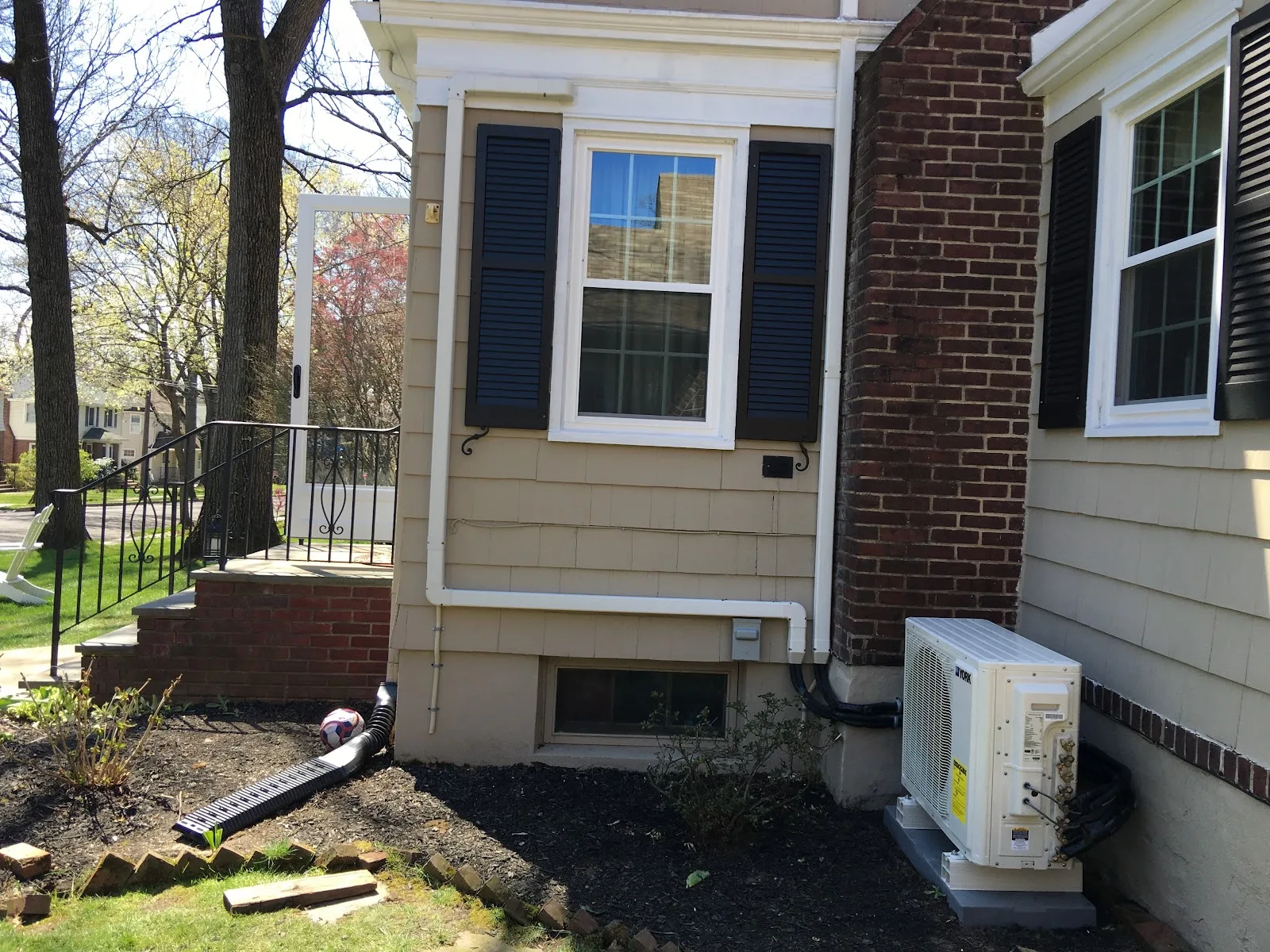
At New Jersey's June 2026 bundled utility rates, a heat pump costs about the same or more to run than an efficient gas furnace, per NuWatt Energy's NJ clean energy guide. Homes burning oil or propane save money by switching. For a house already on gas, the case for a heat pump rests on rebates and on getting air conditioning in the same unit.
A 95% AFUE furnace turns 95 cents of every gas dollar into heat. A heat pump burns nothing; it moves heat from outdoor air into your ducts, delivering more than one unit of heat per unit of electricity. That ratio falls as it gets colder, and New Jersey electricity costs more per unit of heat than gas, so the two end up close across a season.
Homes where the heat pump wins
Oil and propane homes are the clearest case, since those fuels cost more per unit of heat. Electric baseboard is resistance heat with a COP of 1, and any modern heat pump beats it. A house with no central air also fits: if you'd buy AC anyway, a heat pump covers cooling and most heating in one install.
Homes where gas still makes sense
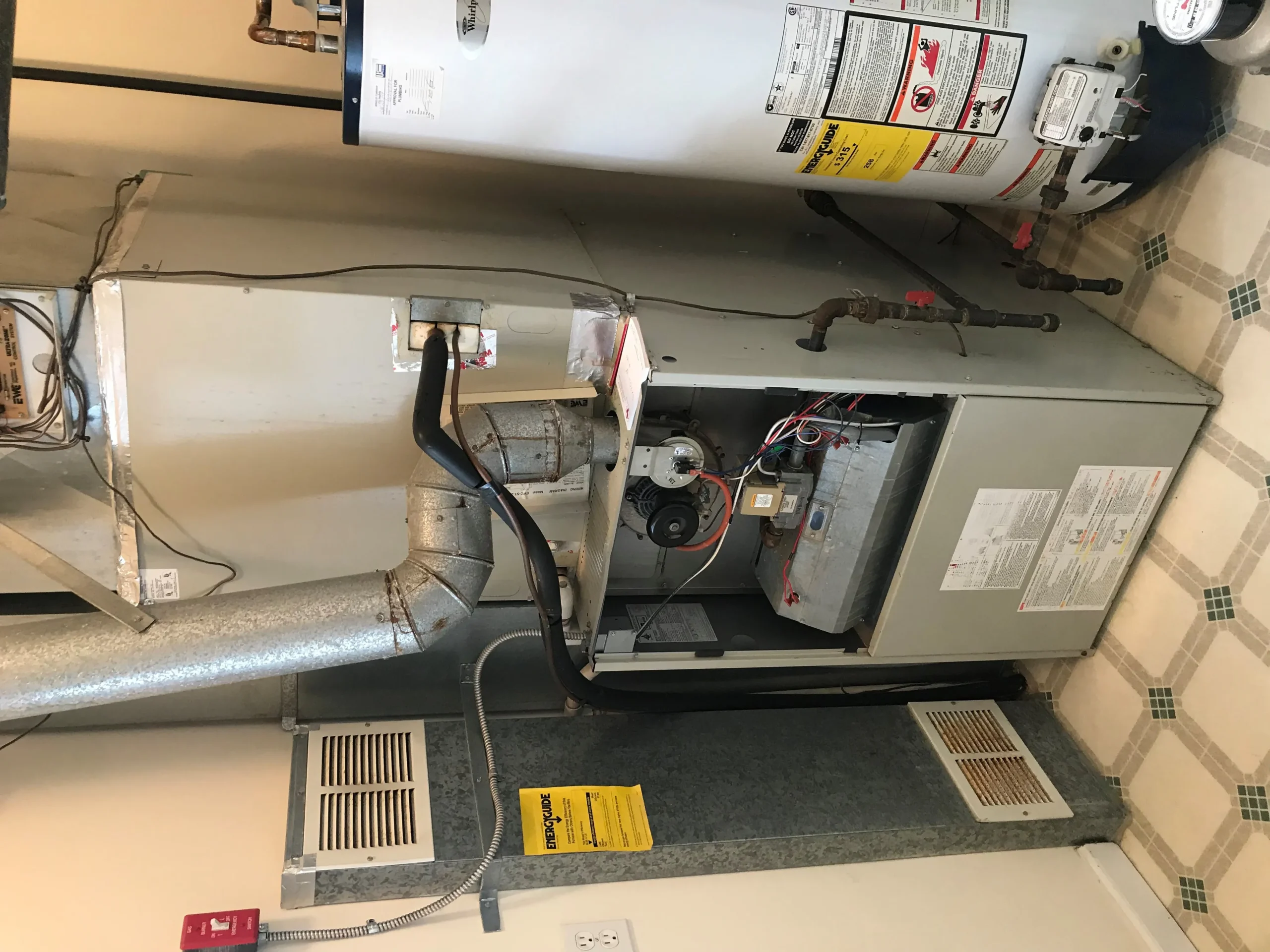
A condensing furnace under ten years old with a working AC isn't worth tearing out. An 18-year-old furnace next to a fairly new AC points toward a gas furnace replacement. When both are near the end, price a heat pump or dual fuel next to a straight gas-and-AC swap, which is still about 65% of NJ residential installs.
Do heat pumps work in New Jersey winters?
Yes. ENERGY STAR certifies cold-climate air-source heat pumps with third-party testing down to 5°F, and certified units keep running below that. To earn the label, a unit must hold a coefficient of performance (COP) of at least 1.75 at 5°F and keep at least 70% of its 47°F heating capacity. Union County winters spend most hours well above 5°F.
A COP of 1.75 means 1.75 units of heat for every unit of electricity, even at 5°F. Older single-speed heat pumps lost output fast below freezing, which is where their bad northern reputation came from. Today's variable-speed inverter compressors ramp up as it gets colder. You can check any model's tested numbers on the ENERGY STAR air-source heat pump page or in NEEP's public cold-climate heat pump database.
Two things surprise first-time owners. The outdoor unit runs defrost cycles in wet, cold weather, and steam may rise off it briefly. Supply air also feels warm rather than hot compared with a gas furnace, so the system runs longer, steadier cycles.
What backup heat costs you
All-electric systems carry resistance heat strips in the air handler for the coldest hours and defrost. Those strips have a COP of 1, so each hour they run costs more than the heat pump itself. A properly sized cold-climate unit keeps strip time short; an undersized one leans on them all January and runs up the bill.
How does a dual fuel heat pump work?
A dual fuel system, also called a hybrid heat pump, pairs an electric heat pump with a gas furnace on the same ductwork. The heat pump handles cooling and most heating, and the thermostat switches to gas once the outdoor temperature falls below a set balance point, where gas becomes cheaper or the heat pump starts running short of capacity.
The heat pump's indoor coil sits on the furnace where an AC coil sits today, and the furnace blower moves air for both. You keep your gas line and venting. ENERGY STAR itself says pairing a heat pump with backup heat is the most efficient way to cover the very coldest temperatures.
We set the balance point from your gas and electric rates, the heat pump's low-temperature capacity and your house's heat loss, and it can be changed at the thermostat if rates move. Since you're buying both machines, dual fuel prices closer to a full system replacement than a furnace swap. It fits best when furnace and AC are aging out together.
Want both options priced on paper?
We'll quote a gas furnace, a heat pump and a dual fuel system for your house, with rebates noted, so you can compare them side by side.
Call (908) 275-3953 Request service onlineHow do the two systems compare side by side?
A gas furnace costs less to install, $3,500-$8,500 in New Jersey against $6,500-$15,000 for a heat pump, per HVACProjectCost's June 2026 guide. A furnace typically lasts 15-20 years and a heat pump 10-15, because the heat pump runs all year. The heat pump covers cooling too; a furnace needs a separate central air system.
| Factor | Gas furnace | Heat pump | Dual fuel |
|---|---|---|---|
| Typical NJ installed cost (2026) | $3,500-$8,500 | $6,500-$15,000 | Varies; closer to a full system ($8,500-$17,000 for AC plus furnace) |
| Fuel | Natural gas | Electricity | Electricity, gas below the balance point |
| Air conditioning included | No, needs a separate AC | Yes | Yes |
| Typical lifespan | 15-20 years | 10-15 years | Heat pump 10-15, furnace 15-20 |
| Running cost on gas at June 2026 rates | Same or lower | Same or higher | Picks the cheaper fuel by temperature |
| 2026 rebates | ETG $900 (condensing replacing non-condensing) | PSE&G and JCP&L programs | Depends on equipment and utility |
| Best for | Gas homes with a newer AC | Oil, propane, baseboard or no-AC homes | Gas homes replacing furnace and AC together |
North Jersey labor runs 15-20% above the state average. For a full breakdown of what drives those ranges, read our guide to what a new HVAC system costs in NJ in 2026. Your price depends on a site visit, a load calculation and duct condition.
What if my older home has no ductwork?
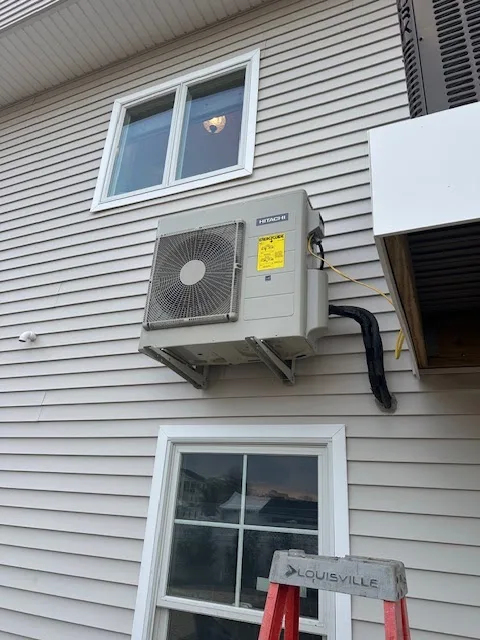
Go ductless. A mini-split pairs a compact outdoor heat pump with one or more wall-mounted heads inside, connected by a small refrigerant line set. It's the usual answer for Union County Colonials and Cape Cods heated by radiators, and JCP&L lists ductless mini-split rebates up to $750, with PSE&G offering instant rebates on qualifying units.
Many pre-war houses here have cast iron radiators or hydronic baseboard and no ducts. Running ductwork through plaster walls is expensive and messy. A mini-split head mounts on an exterior wall with a small hole for the line set and drain, and one outdoor unit can feed several rooms.
Many owners keep the boiler for deep cold and use mini-splits for cooling and shoulder-season heat. We covered that setup in our post on ductless mini-split installation in Berkeley Heights, and the same approach fits older homes in Westfield and Cranford.
Which NJ rebates apply to heat pumps and furnaces in 2026?
The federal 25C tax credit is gone for anything installed after December 31, 2025, so 2026 money comes from utilities. PSE&G runs a Building Decarbonization program for customers replacing gas heat with heat pumps, JCP&L runs Clean Comfort with air-source heat pump rebates up to $1,000, and Elizabethtown Gas pays $900 for a qualifying condensing furnace.
Heat pump rebates
PSE&G gives instant rebates on qualifying heat pumps and mini-splits through participating contractors and its Marketplace, with extra for low-to-moderate income households. JCP&L's Clean Comfort lists up to $1,000 for air-source heat pumps and $750 for ductless. Amounts change, so check current numbers before you sign.
The NJ Clean Energy Whole Home program pays $2,000 at 5% projected savings, up to $7,500 at 33% or more, after an energy assessment by a BPI-certified contractor. See NJ Clean Energy.
Gas furnace rebates
Elizabethtown Gas, which serves much of Union County, pays $900 for a 95%+ AFUE furnace replacing a non-condensing furnace. Swapping one condensing furnace for another doesn't qualify. You need a Manual J and Manual S, the AHRI certificate, the invoice and a photo of the old unit, and you apply within 120 days of purchase. Low-to-moderate income households get $300 more per item. The rules are in the ETG residential rebate application.
What happened to the federal credit
The One Big Beautiful Bill Act, signed July 4, 2025, ended the 25C credit for property placed in service after December 31, 2025. Before that, a heat pump earned 30% back, up to $2,000. New Jersey has no state tax credit for heat pumps either. Our full list is in the 2026 NJ HVAC rebates guide, and you can spread the rest of the cost through our HVAC financing options. PSE&G also offers 0% on-bill repayment for qualifying projects.
How should a heat pump or furnace be sized?
With a Manual J load calculation, done room by room from your square footage, insulation, windows and air leakage, followed by Manual S equipment selection. Elizabethtown Gas won't pay its furnace rebate without that paperwork, and an oversized system short-cycles, leaves humidity behind in July and wears parts faster than one matched to the house.
Copying the old unit's size is how many houses in Linden and Clark ended up with oversized furnaces, especially after new windows and insulation. Heat pumps punish that habit harder: sized for cooling, one can come up short in January; sized for winter, it can be too big to dry the air in August. Variable-speed models narrow that gap.
Ductwork gets checked on the same visit. Heat pumps push cooler air than a furnace, so leaky or undersized ducts show up fast as cold rooms. Many older NJ homes have one central return; adding a return drop runs $500-$1,000.
What does Union County housing stock mean for this choice?
It mostly comes down to what's in your basement now. Many postwar ranches and split-levels around Linden, Clark and Garwood have ducts and a gas furnace, so a heat pump or dual fuel swap is straightforward. Many pre-war Colonials and Capes in Westfield and Cranford run boilers with radiators and no ducts, which points toward ductless or keeping the boiler.
A heat pump needs a dedicated 240-volt circuit, and an older panel may not have room. New Jersey requires a mechanical permit and usually an electrical permit for the job; the contractor pulls them and a town inspector signs off.
Your rebates depend on your mix of Elizabethtown Gas with PSE&G or JCP&L. Our local pages for HVAC service in Linden, Cranford and Westfield cover what we see most often in each town.

What does a heat pump installation day look like?
A straight replacement on existing ducts can often wrap up the same day. Jonathan H. wrote in his Google review, "The old unit was 20 years old and died," and added, "The team showed up on time and were done in less than five hours." That job was a new heat pump. New ductwork, a panel upgrade or a line set rerun adds time.
On a typical swap, the crew recovers the old refrigerant, sets the new outdoor unit, replaces the coil, charges the system and tests both modes. New heat pumps use A2L refrigerants like R-454B or R-32, which can't run through an old R-410A coil, so both pieces are replaced as a matched pair.
Our heating installation team handles furnaces, boilers and heat pumps, and our AC installation crew does the cooling side of the same job. A year-round heat pump needs twice-a-year heating and cooling maintenance rather than one fall tune-up.
What should you do next?
Start with what you already have: your fuel type, the age of your furnace and AC, and whether the house has ducts. Then get a quote built on a Manual J calculation that prices a gas furnace, a heat pump and dual fuel next to each other, with 2026 rebates subtracted. Blue Air One lays out the options, and you make the call.
- Read the data plates on your furnace and outdoor unit for the manufacture year.
- Pull 12 months of gas and electric bills so the running-cost comparison uses your real usage.
- Confirm rebate rules before you sign, since PSE&G instant rebates go through participating contractors.
- Ask every contractor for a written Manual J and the AHRI certificate for the matched system.
- Check monthly payment options if the upfront gap is what's holding you back.
We're at 508 W. Elizabeth Ave in Linden (NJ license NJ19HC00122900). Book an in-home estimate online or by phone.
Get a heat pump vs gas furnace quote for your home
Our Linden team runs the load calculation, checks your ducts and panel, and shows the rebates you qualify for before you decide.
Call (908) 275-3953 Request service onlineFrequently asked questions about heat pumps and gas furnaces in NJ
Do heat pumps work in New Jersey winters?
Yes. ENERGY STAR cold-climate heat pumps are tested down to 5°F and must deliver a COP of at least 1.75 there, while keeping 70% of their 47°F capacity. They keep running below 5°F. Most Union County winter hours sit well above that, and a dual fuel setup can hand the coldest nights to a gas furnace.
Is a heat pump cheaper to run than gas heat in NJ?
Usually not for homes already on natural gas. NuWatt Energy found that at New Jersey's June 2026 utility rates, a heat pump costs about the same or more to run than an efficient gas furnace. Homes heating with oil, propane or electric baseboard do save by switching, and the heat pump also replaces your central air.
What is a dual fuel heat pump?
A dual fuel or hybrid system pairs an electric heat pump with a gas furnace on the same ductwork. The heat pump cools in summer and heats most of the winter. When the outdoor temperature drops below a set balance point, the thermostat switches to the gas furnace, which keeps heating costs and comfort steady on the coldest days.
How much does a heat pump cost in New Jersey?
HVACProjectCost's June 2026 guide puts heat pump replacement in New Jersey at $6,500-$15,000, against $3,500-$8,500 for a gas furnace. North Jersey labor runs 15-20% above the state average. Your price depends on a site visit, a Manual J load calculation, ductwork condition and whether the electrical panel needs work for the new circuit.
Is there a federal tax credit for heat pumps in 2026?
No. The One Big Beautiful Bill Act ended the 25C Energy Efficient Home Improvement Credit for equipment placed in service after December 31, 2025. Before that, heat pumps earned 30% back up to $2,000. In 2026, the money comes from utility programs run by PSE&G, JCP&L and Elizabethtown Gas, plus the NJ Clean Energy Whole Home program.
Does PSE&G give rebates for heat pumps?
Yes. PSE&G offers instant point-of-sale rebates on qualifying heat pumps, ductless mini-splits and heat pump water heaters through participating contractors, with extra amounts for low-to-moderate income households. It also runs a Building Decarbonization program for customers replacing gas heat with heat pumps. Check current amounts with your contractor before signing, since program terms change.
Can I add a heat pump to a house with radiators?
Yes, with ductless mini-splits. Wall-mounted heads connect to an outdoor heat pump through a small line set, so you don't need ductwork. Many Union County homes keep the boiler and radiators for the deepest cold and use mini-splits for air conditioning plus spring and fall heating. JCP&L lists ductless rebates up to $750.
How long does a heat pump last compared to a gas furnace?
A heat pump typically lasts 10-15 years and a gas furnace 15-20 years. The heat pump runs in both summer and winter, so its compressor logs more hours than a furnace burner. Twice-yearly maintenance, clean filters and a clear outdoor coil help a heat pump reach the top of that range in New Jersey weather.
